The Wesley Legacy
Charles Wesley & Hinde Street
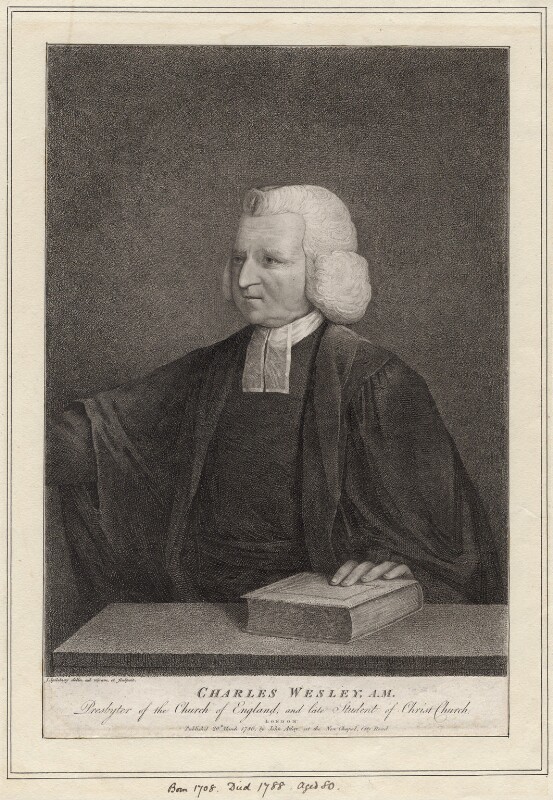
Marylebone has deep and enduring connections with the Wesley family, including John and Charles Wesley, founders of Methodism. Hinde Street itself had especially close ties with Charles Wesley, the great hymn writer credited with composing around 6,500 hymns.
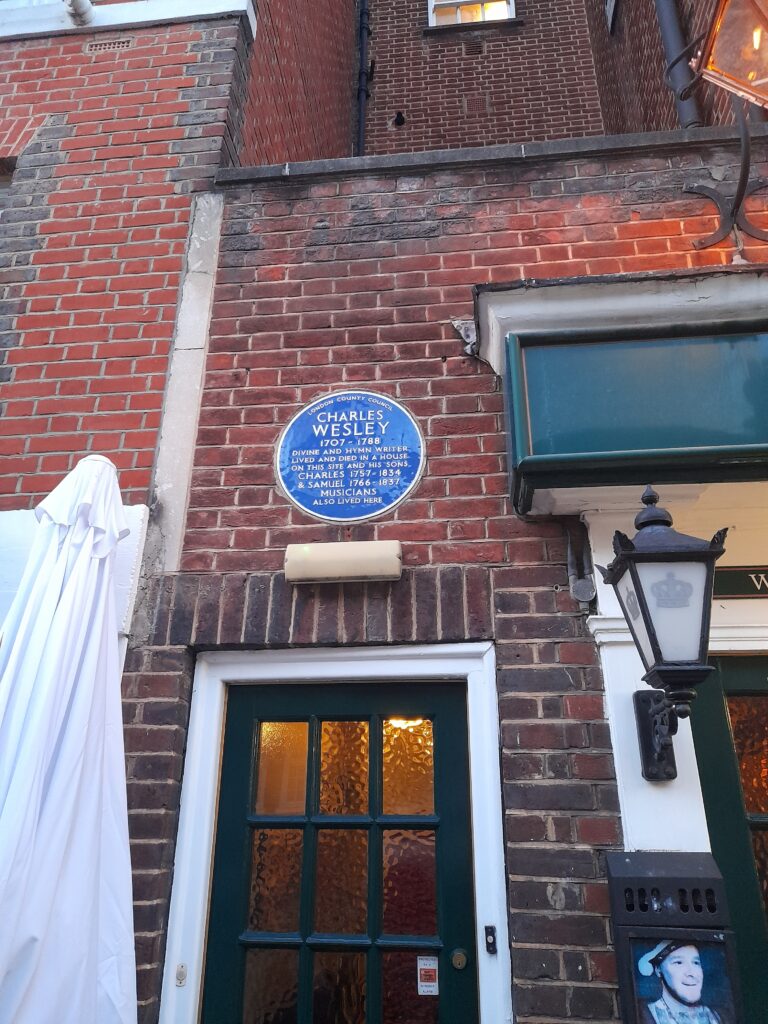
In 1771, Charles moved to 1 Chesterfield Street (now Wheatley Street), at a time when Marylebone still retained something of its rural character. From his home there, he served the London chapels until his death in 1788. Known locally for riding his grey mare across the fields to preach at West Street and City Road, Charles remained a committed member of the Church of England and was buried in the churchyard of the old Marylebone Parish Church. His widow remained in the area until her death in 1822. Today, the King’s Head pub stands on the site of the Wesley home – you can find a blue plaque honouring this history above one of the entrances there.

Charles’ children were also closely connected to Marylebone. His sons, Charles and Samuel, were musical prodigies who performed concerts at home and supported the work of the local Methodist society, including at Hinde Street. Charles Wesley Jr. later became private organist to the Prince Regent and organist at Marylebone Parish Church. Samuel, who had started composing at the age of seven, was referred to as ‘the English Mozart’ and was thought by some to be the most original composer of his time.
Memorial Garden
The old parish church, originally dating from 1400 and rebuilt in 1741, was closed in 1926 and demolished in 1949. The graves of Charles and Sarah Wesley and their sons Charles and Samuel which were in the churchyard adjacent to the present parish church (built in 1817) were marked by an obelisk. Following post-war redevelopment, part of the former churchyard became a memorial garden designed by Louis de Soissons and dedicated in 1952.
Although redevelopment in 2005 required the relocation and reburial of the Wesley remains, a newly redesigned garden was opened in 2007, marking the tercentenary of Charles Wesley’s birth.

Following Wesley
Today, south Marylebone remains a vibrant centre of Christian and interfaith worship, with Hinde Street Church continuing this rich spiritual heritage.
After the Second World War the Hinde Street worship tradition continued. The Recorder remarked in 1950 that: ‘many visitors enjoy the service, which is substantially the same as when Charles [Wesley Jr.] and [his sister] Sally Wesley were members. It has a tradition of beauty in its worship that many appreciate.’ At the Church Council of October 1951, members expressed appreciation of the ‘reverent use of the liturgical service in preference to a lifeless adherence to a form of words”.
In 1961 Hinde Street was one of only an estimated 40 Methodist churches that retained the ‘Order of Morning Prayer’. Kenneth Wilson was the probationer minister at Hinde Street from 1964 to 1966. He recalls that: ‘the worship was formal, Morning Prayer according to the Methodist Book of Offices and much singing with choir of the hymns of Charles Wesley. I can remember, thank goodness, no ditties or Christian songs.’
Today, our services have many traditional aspects but we are also not afraid to try something new, which is why our worship together takes different forms. A small twice-monthly communion service uses an adapted form of the 1936 Book of Offices liturgy, brought to Hinde Street in 1986 by Revd Lord Soper and the Kingsway Hall congregation. The 11am service is led by an intentional diversity of preachers and ministers and we value breadth of thought and wisdom, passion, and application to real life. These services may be quite traditional, may include creative responses in prayer and sharing, and also may include an opportunity to give (e.g. Harvest, Toy Service). A few times each year we also have a discussion-based Café worship. Our evening services are generally more informal and take place twice per month in either hybrid form or online.
We sing a variety of hymns and some worship songs and are very appreciative of having a church musician who enhances our experience of worship in playing the wonderful organ and piano to their full potential. There is an order of worship available online and a few printed copies for those who find this useful. We have a Sensory Box available with resources for people who are neurodivergent or anyone who would like to use them.
Charles Wesley’s hymns are still among of our favourites to sing, and we still keep up the tradition of class meetings, which you can read more about here. Additionally, you can find out more about what to except at a Hinde Street Sunday service here or read what our visitors have to say on our Testimonials page!
We have also named one of our recently refurbished rooms after Charles Wesley in order to commemorate his legacy.
Thanks
Thanks to Alan Brooks of the Hinde Street congregation for his extensive historical research on which most of the contents of this page are based.
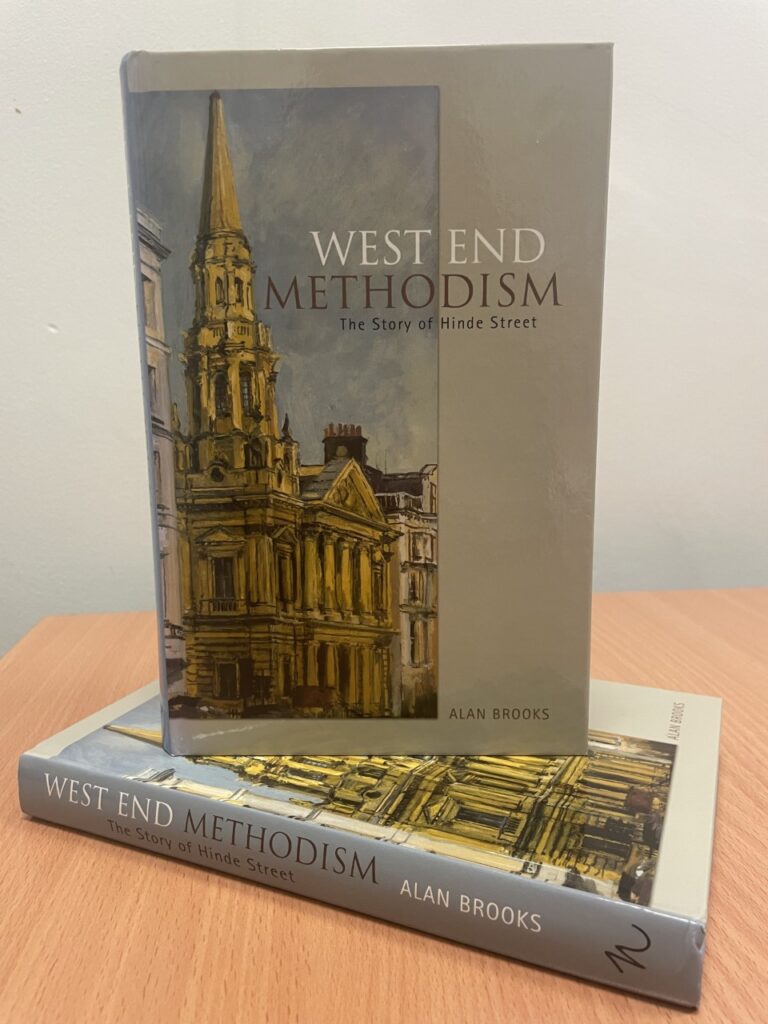
If you wish to know more about the history of Hinde Street, you can purchase Alan’s book West End Methodism: The Story of Hinde Street by reaching out to our office.
Thanks also to Mike Wood for his recent book The Memorial Garden: unearthing Marylebone’s Hidden History (2024), which provided valuable information about the Wesley graves. The portrait of Charles Wesley by Jonathan Spilsbury (stipple engraving, 1786) is held at the National Portrait Gallery.