Classes

What is a class?

In the early days of Methodism, John Wesley organised small groups, called Bands, which met regularly to support each other. In his rules for Bands, drawn up on Christmas Day 1738, this is what he proposed:

“The design of our meeting is to obey that command of God, ‘Confess your faults one to another, and pray one for another, that ye may be healed…’”

To this end, we intend:

1

To meet regularly with our class, whether that be weekly, monthly, or otherwise.

2

To begin with singing or prayer.

3

To attend in the spirit of sharing, listening, and learning.

4

To speak each of us in order, freely and plainly, the true state of our souls, with the faults we have committed in thought, word, or deed, and the temptations we have felt, since our last meeting.

5

To end every meeting with prayer, suited to the state of each person present.

6

To desire some person among us to speak his own state first, and then to ask the rest, in order, as many and as searching questions as may be, concerning their state, sins, and temptations.

To join a class, you can attend a Sunday Service to connect with a group leader or member, or email our office and we will put you in touch!

Classes at Hinde Street:

There are various classes organised by members of Hinde Street that take place both at the church and elsewhere in London. Each class is organised in its own unique way and but they all aim to help its members engage with the Christian faith and community.

Read more below to find one that is right just for you!
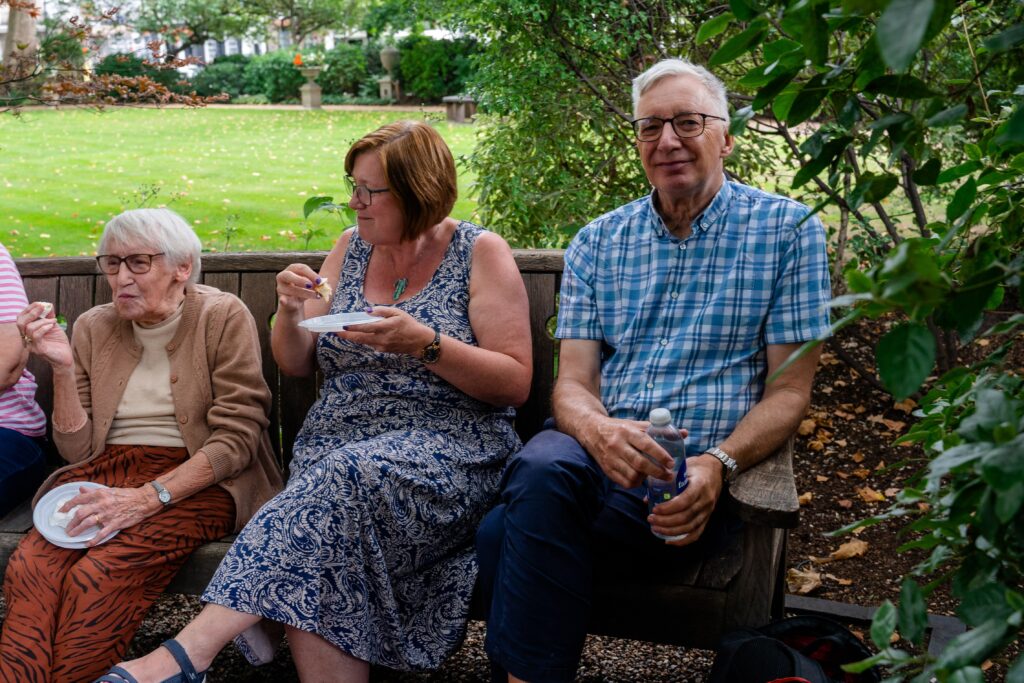
Sam Walker’s class meets at Hinde Street after the 11am service, usually on the third Sunday of the month. “We begin with light refreshments, followed by opening prayers and then about an hour’s conversation. Sometimes, we engage over several months in a course based on a Bible study, a Lent book, a conference statement, or something else similar. There are altogether over 30 in our pastoral care, with attendance being on most occasions usually between eight and twelve. Many members are from Africa, but there is a widening mix and we welcome new members of every kind.”  Deputy Leader Miriam Hazeley-Wilson, Assistant Leaders Sallie Choate, and Grace Osibogun.

Brenda Doku’s class has members from many parts of London and meets in a member’s home (usually in West Central London) on a different night each month. “Average attendance is about ten people. We are a friendly, chatty and caring group of people, women and men, old and young. We gather at 7.30pm, have coffee, converse and catch up with news, and then study, discuss and pray until about 9.30pm. Sometimes we have a long-term project and study a book. At other times we vary the topic each month. We include in our programme Bible study and social occasions.”

North London class describe themselves as “a group of friendly committed people who share an enthusiasm to explore what Christian living entails for us individually and corporately. We represent a range of theological positions from fairly mainstream to liberal, and even unorthodox at times. We work collaboratively and enjoy our diversity in terms of gender, age and culture. We usually meet on the second Thursday of the month at a class member’s home at 7.30pm. We aim to review our class each year and often decide on a theme for the year. We base our discussions on a range of materials, sometimes external (articles, sermons) and sometimes internal (experiences, objects, insights and reflections). We have a time for devotions at each meeting. We have a good party in the summer, and sometimes, a cosy meal together in the winter. Numbers attending vary from eight to ten”.  Joint Leaders, Gareth Evans and Alison Leao. Deputy Leader Christine Rodson.

Edna Wijeratna’s class is predominantly from West London and meets sometimes at a class member’s home but mainly at Hinde Street in the Quiet Room. “We meet on a different night each month. We have a good mix of both morning and evening congregations and a wide range of ages and backgrounds. Meetings may be led by a class member or by an invited speaker and may include discussions of topical issues, theology and social concerns as well as Bible study. We also share our news and concerns and have two lunches a year, one in the summer, the other after Christmas.” Numbers attending vary from six to twelve. Deputy Leader Margaret Rudland.

Annette Borysiewicz‘s class is composed of young people, now in their teens and early twenties, who were together in Junior Church and the Young People’s Group at Hinde Street.  Now that some are at University, and some have left to start work and to travel, meetings are arranged during the holidays and take the form of Sunday lunch at a local restaurant.

Gordon Slater’s class meets monthly and weekly. Monthly meetings take place at Hinde Street on the last Wednesday of the month from 7.00pm until 8.30pm. A standalone subject is discussed with the class taking it in turns to suggest a topic. A common pattern is for each of us to find something to read, including a Bible reading and a relevant prayer. We meet to enjoy fish and chips before the evening class. Weekly meetings take place on Wednesday mornings from 10.30am until 12.00 pm via WhyPay (phone) and the pattern of meetings is similar to those in the evenings. Please note that there is no weekly meeting for the week during which the monthly evening meeting takes place. There is no deputy leader at the moment.

Class History:

Bands, however beneficial, were rather elite groups – not all members of a Methodist Society belonged. In fact, classes had a rather unspiritual origin! In 1742, The Methodist Society in Bristol was heavily in debt, and on 15th February, Wesley summoned the leaders to consider how to raise money to pay off what was owed. Captain Foy proposed that every member should be asked to give a penny a week. But some were too poor to afford even one penny, he was told. So he offered to take responsibility for eleven of the poorest members, to call on them weekly for their one penny contribution, and if they couldn’t afford it, to make good the deficit himself. Other leaders offered to do the same, and the whole society was divided into classes of about twelve people.
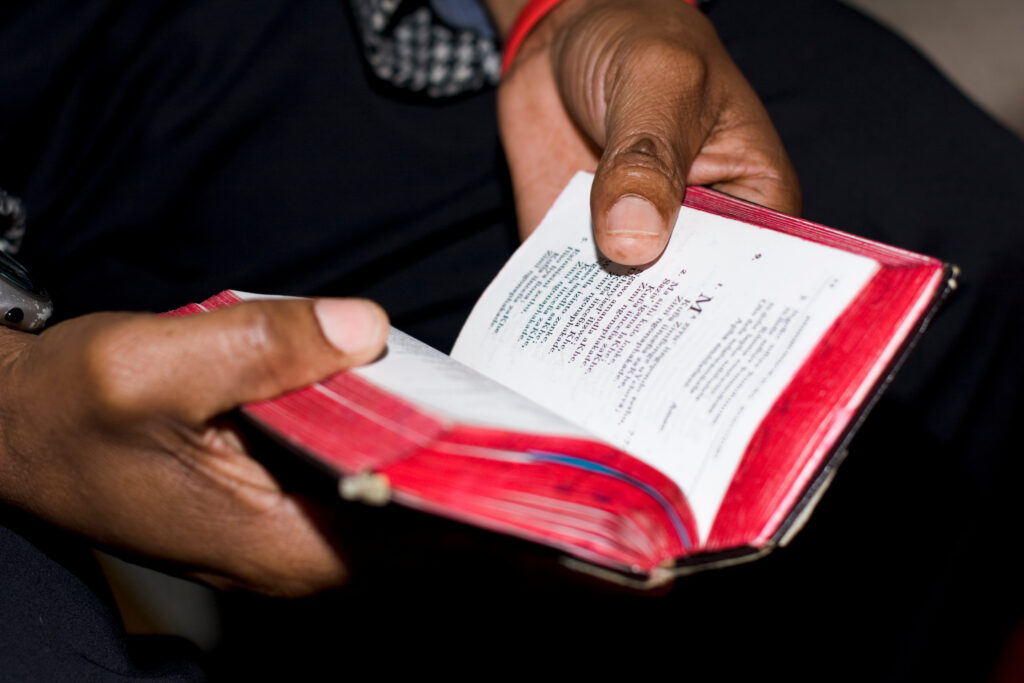
John Wesley soon realised that these groups of twelve, each with their own leader, could be used for another purpose. Each leader knew ‘his’ twelve intimately, and met them each week. So these groups could be used to keep in touch, and to ‘watch over one another in love’. They could be the foundation of pastoral care and oversight in the Society.

In another inspired leap, the weekly visit to collect money changed into a weekly ‘class meeting’ – where the twelve met for mutual fellowship and support, under the care of ‘their’ lay leader. Before long, this system had been welcomed and adopted throughout the country. And although the collection of money dropped out of the class meeting system comparatively early, class meetings formed a central part of Methodist practice for around 150 years.

Classes in modern Methodism:

Traditionally, in Methodism, every church member is also a member of a class. In many Methodist churches, the pastoral and fellowship elements of the class have separated in recent years. But this tradition is still alive at Hinde Street, where the practice of combining pastoral care and meetings in the same groups is one of the great strengths of our church life.

The class leader and assistant leaders are responsible for keeping in touch with each member of their class, visiting them when they are unwell, and supporting them through the ups and downs of life. Classes also meet regularly for food, fellowship, Bible Study, discussion and prayer.

Most classes now meet monthly (though one class does still meet weekly) and we are not quite as strict as Wesley on the issue of punctuality! But we do try to speak freely and plainly, the true state of our souls.

If you’d like to read more about the place of small groups in Methodism, you can do so on the Methodist Church website.